You pass countless hours on the perfect CV. Your arrangement is neat, you have a solid experience, and there is no doubt that you are the right person for the job. After clicking on "submit," all you get is silence. Does it ring a bell?
The Applicant Tracking System (ATS), which is an unseen gatekeeper in your application process, is often the root of the problem rather than you. These systems search for specific resume keywords before anybody even has a chance to see your resume. No matter how good your qualifications are, if your application lacks the right terms it gets rejected.
You might feel like you are screaming in the dark. But what if you knew the secret language? What if you had the exact keywords that would make your resume stand out to the applicant tracking system?
In this guide, we’ll break down the best ATS resume keywords and the strategic way to use them, transforming your resume from invisible to irresistible.
What Are Resume Keywords and Why They Matter
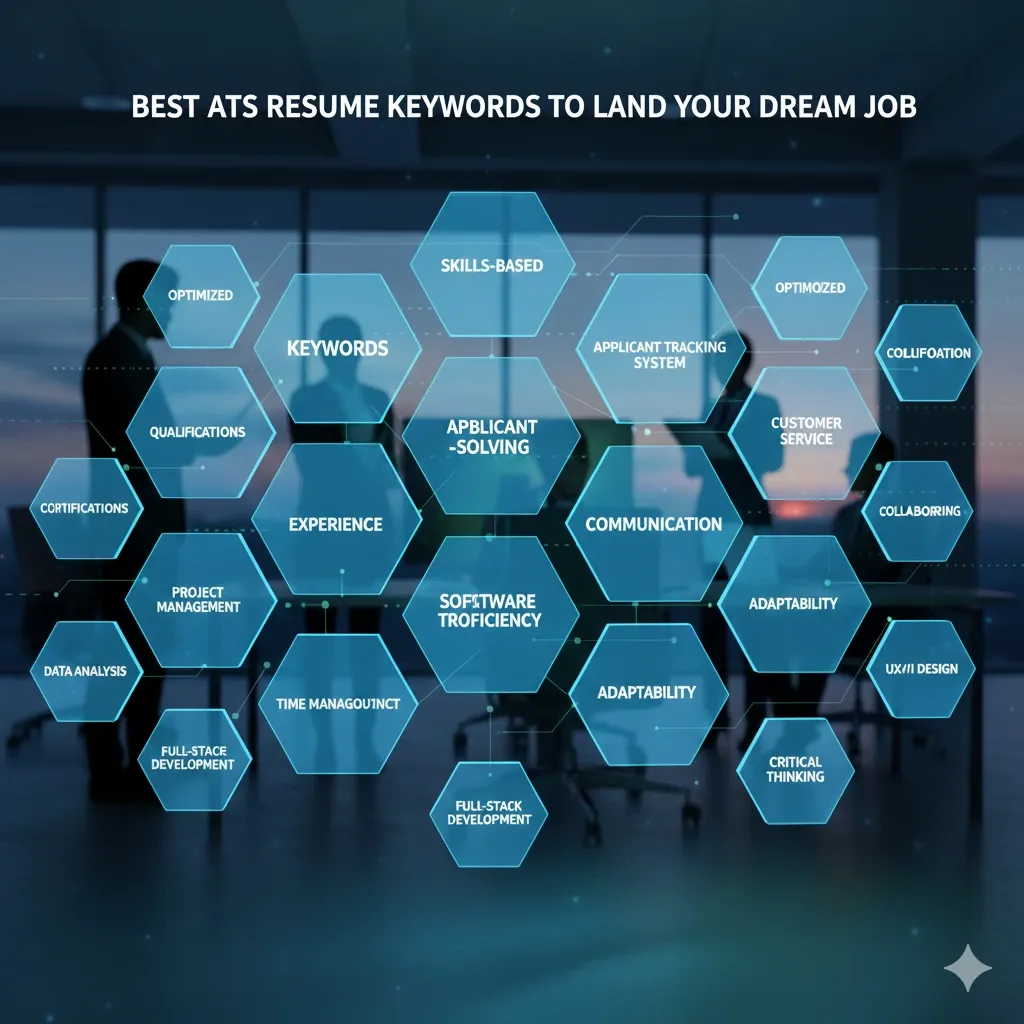
Let’s clear this up first. The hiring manager's specific words and expressions to describe the ideal candidate are called resume keywords. Those are the main skills, job titles, tools, and certifications enumerated in the job description.
Think of the ATS as a very literal, extremely efficient assistant. Its main job is to answer the recruiter's question, "Does this resume contain the essentials we're looking for?" It does this by searching for specific pre-set keywords.
When you intentionally put the right keywords in a resume, you are speaking the language of the system. You are providing clear, machine-readable proof that your profile matches the job.
This is the single most effective way to ensure your resume makes it past the digital gatekeepers and onto the hiring manager's "yes" pile.
How ATS Works and Why “ATS Resume Keywords” Are Critical
What is an ATS, Really?
An Applicant Tracking System (ATS) is a software utilized by majority of medium to large companies to handle the tsunami of applications that they get. The first task it does is parsing, it extracts the information from your resume and converts it into a database in a uniform format. It searches for the most essential data points: your name, contact information, and above all, your abilities and work experience.
The Matching Game
After the parsing process, the ATS evaluates your resume's compatibility with the job description and gives it a score. That's the point at which the keywords in your ATS resume turn out to be your best asset. The system is in search of both exact and related matches. For example, if the job description mentions "proficiency in Salesforce," but your resume only states "used a CRM," you will probably not receive the full credit. The exact terminology is given preference by the system.
The Danger of Keyword Stuffing
Do not, however, start churning out the whole set of keywords in a white color, instead refrain from doing so! Sophisticated 'ATS' software of today is capable of recognizing 'keyword stuffing.' If your CV turns into a senseless compilation of words or your phrases are like a struggle and not fluid, the system will penalize you. What’s worse, even if you manage to get through, a person will very quickly be put off by the bad readability. The aim is to combine strategically, not to deceive.
Types of Resume Keywords You Should Use
To build a powerful resume, you need a balanced keyword diet. Here are the essential categories.
Job Title Keywords
The most basic ones are these. The ATS is frequently set up to scan for the specific job title that the organization is recruiting for. If you are seeking a "Senior Product Manager" position, make sure to include that title in your resume, either in your executive summary or as part of your latest job title.
Examples: "Digital Marketing Manager," "Data Analyst," "HR Business Partner."
Skill-Based Keywords
This is the meat of your keyword strategy. Skills can be broken down into two types:
Hard Skills
These are the teachable, measurable abilities. They must be non-negotiable, and they must be listed explicitly.
Examples: Python, Google Ads, Financial Modeling, SEO/SEM, Figma, QuickBooks.
Soft Skills
These are interpersonal traits. They are harder to quantify for an ATS, so you must demonstrate them contextually rather than listing them.
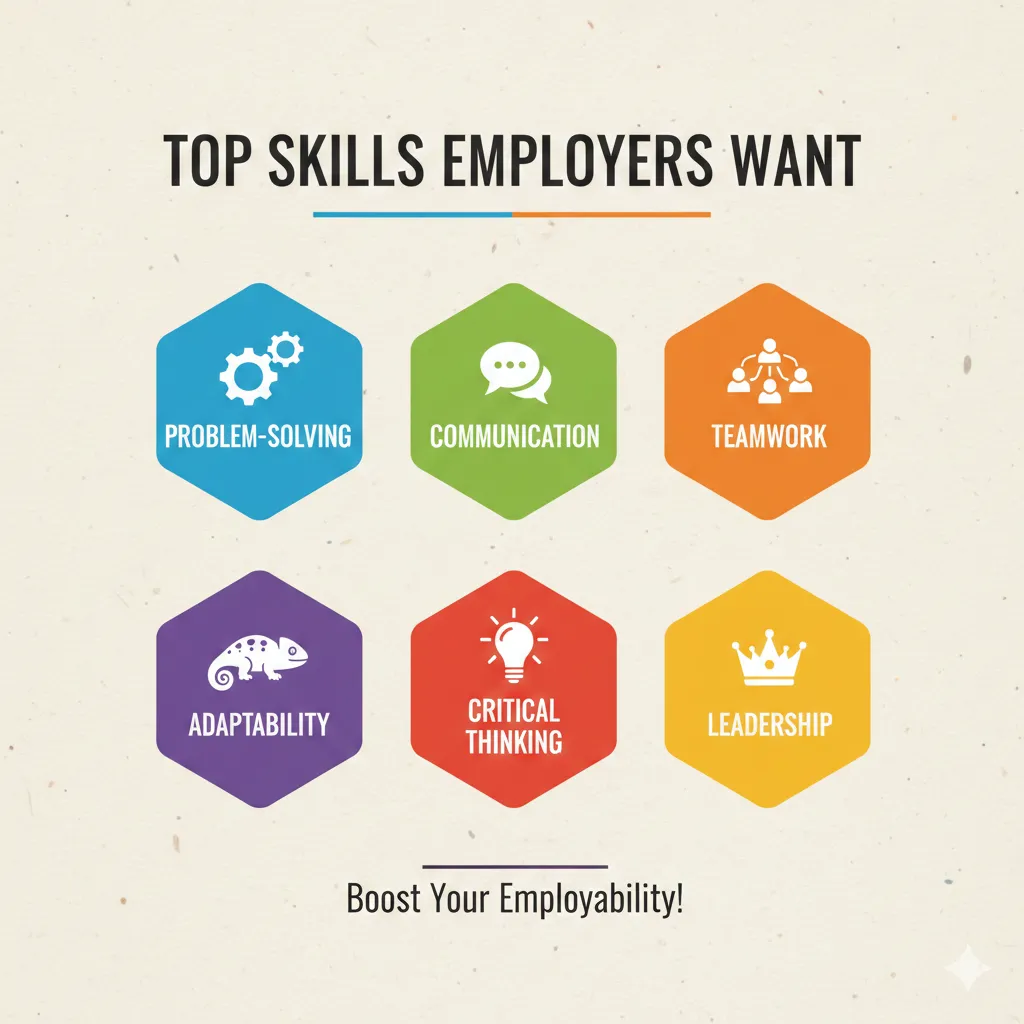
Examples: Communication, Leadership, Problem-Solving, Adaptability.
Industry Keywords
- These terms show you understand the lingo and nuances of your field.
- Marketing: Brand Awareness, Lead Generation, Conversion Rate Optimization (CRO)
- Healthcare: Patient Care, EMR/EHR, HIPAA Compliance. Tech: Agile Methodology, Scrum, CI/CD.
Certification / Tool / Technology Keywords
Specific credentials and software platforms are high-value keywords because they are clear indicators of qualification.
Examples: PMP, CPA, AWS Certified Solutions Architect, Salesforce, HubSpot.
How to Find the Best Keywords to Put on a Resume
Finding the right keywords to put on a resume is like being a detective. The job description holds all the clues.
- Step 1: Analyze the Job Description. Open a blank document and copy-paste the entire job description into it.
- Step 2: Highlight and Tally. Read through it and highlight skills in your resume or any noun phrase that describes a requirement, tool, or qualification. Pay close attention to the "Requirements" section. Note which words are repeated, these are high-priority.
- Step 3: Use a Keyword Scanner. Tools like Jobscan.co can instantly compare your resume against a job description and give you a keyword match rate. This is an incredibly efficient way to see what you're missing.
- Step 4: Tailor with Integrity. Now, integrate these keywords into your resume, but only if you genuinely have that skill or experience. Your goal is to mirror the language of the job description in your own authentic voice.
Best ATS Resume Keywords: Ready-to-Use Lists for 2025
While you should always tailor your list, here are some of the most powerful and in-demand ATS resume keywords to use as a starting point.
Top Resume Keywords by Category
- Leadership & Management
Led, Managed, Directed, Oversaw, Mentored, Supervised, Strategic Planning, Stakeholder Management, Performance Metrics, Change Management.
- Tech & Digital Skills
Python, SQL, JavaScript, AWS, Azure, Git, Docker, Kubernetes, SEO, Google Analytics, Data Visualization, Machine Learning, Agile.
- Sales & Marketing
CRM (Salesforce, HubSpot), Pipeline Management, Prospecting, Client Acquisition, Conversion Rate, Market Research, Content Strategy, Social Media Marketing, ROI.
- Finance & Operations
Budgeting, Forecasting, Financial Analysis, GAAP, Compliance, Risk Management, Process Improvement, Supply Chain, KPI.
💡 HireTip Pro Tip: Don't just list every word. Pick 8–12 keywords that are most relevant to the role and your background, and weave them naturally throughout your resume.
How to Use Resume Keywords Strategically
Knowing the keywords is only half the battle. Where and how you place them is what separates a good resume from a great one.
Placement is Everything
Sprinkle your keywords throughout these key sections:
- Headline/Title: Right at the top.
- Professional Summary: In the first 2-3 lines.
- Skills Section: In a dedicated, easy-to-scan list.
- Experience Bullets: Woven into your achievements.
- Certifications Section: For official credentials.
Context is King
The goal is to show, not just tell. Compare these two examples:
Before (Just Listing): Skills: Communication, Project Management, Python.
After (Contextual): Leveraged **Python** to automate data collection, saving 10 hours per week; **managed** the cross-functional project to completion under budget by **communicating** progress to **stakeholders** weekly.
The second version not only includes the keywords but proves you know how to use them to drive results.
Formatting & File Tips for ATS Compatibility
The best ATS resume keywords in the world won't help if the system can't read your file.
- Keep It Simple: Use a clean, single-column layout. Avoid tables, text boxes, images, and graphics.
- Use Standard Fonts: Stick with classics like Arial, Calibri, Georgia, or Times New Roman.
- File Type Matters: If given a choice, a .docx file is often most easily parsed. A PDF is also good, but ensure it's a text-based PDF, not an image scan.
- Use Standard Headings: Label your sections clearly with "Work Experience," "Skills," and "Education."
Common Resume Keyword Mistakes (And How to Avoid Them)
- Overusing Generic Terms: "Hard worker," "team player," and "detail-oriented" are fluff. Replace them with specific, action-oriented keywords.
- Keyword Stuffing: Forcing keywords into sentences where they don't belong makes your resume unreadable. Prioritize natural language.
- Using Synonyms Instead of Exact Matches: The ATS wants "SEO," not "search engine findability." Mirror the job description's language exactly.
- Copy-Pasting Without Tailoring: This is a major red flag for recruiters. It shows a lack of genuine interest.
- The One-Resume-Fits-All Approach: Sending the same generic resume for every job is the fastest way to get lost in the ATS abyss.
Tailoring Your Resume Keywords for Every Job
This is the most important takeaway from this entire guide: You must customize your resume for every single application.
It takes time, but it's the #1 thing you can do to increase your interview rate. Before you hit submit, run through this mini-checklist:
- Have I identified the top 8-12 keywords from this job description?
- Are these keywords placed in my summary, skills, and experience sections?
- Do my experience bullets use these keywords to describe my achievements?
- Does my resume read naturally, or does it feel forced?
- Ready to make it easy? Download our free Keyword Tailoring Checklist to streamline this process for every job you apply to.
FAQs About Resume Keywords
1. What are the best keywords to put on a resume?
The best keywords are always the specific skills, tools, job titles, and certifications mentioned in the job description you are applying for. There is no universal "best" list, only the best list for that specific role.
2. How many keywords should I include?
Aim for 8-12 well-placed keywords that are naturally integrated throughout your resume. Quality and context matter far more than quantity.
3. What are ATS resume keywords?
ATS resume keywords are the specific terms that Applicant Tracking System software is programmed to scan for when filtering resumes. They are directly pulled from the job description.
4. Can using too many keywords hurt my chances?
Yes. "Keyword stuffing" makes your resume sound robotic and unnatural. It can be penalized by the ATS and will definitely be rejected by a human reader.
5. Should I copy the job description keywords exactly?
Yes, but only when it truthfully reflects your experience. Use the exact terminology for hard skills and tools (e.g., "Google Analytics," not "web analytics tool").
6. Where should I place resume keywords?
Place them in your professional summary, skills section, job title headings, and, most importantly, within the bullet points describing your achievements in your work experience.
7. Do I need to update keywords for every job application?
Absolutely, yes. This is the most critical step. Every job and every company uses slightly different language, and tailoring your keywords to put on a resume for each application is the key to success.