Tired of Your Resume Getting Ignored? Here Are The Top Skills Employers Actually Want.
Let's be real. Writing your resume can feel like the most awkward kind of bragging. You stare at the "Skills" section, and your mind goes blank. Is "Proficient in Microsoft Word" going to impress anyone? Should you claim you're a "team player" and call it a day?
We've all been there. That moment of panic is why so many resumes end up with a generic, forgettable list that gets lost in the digital void.
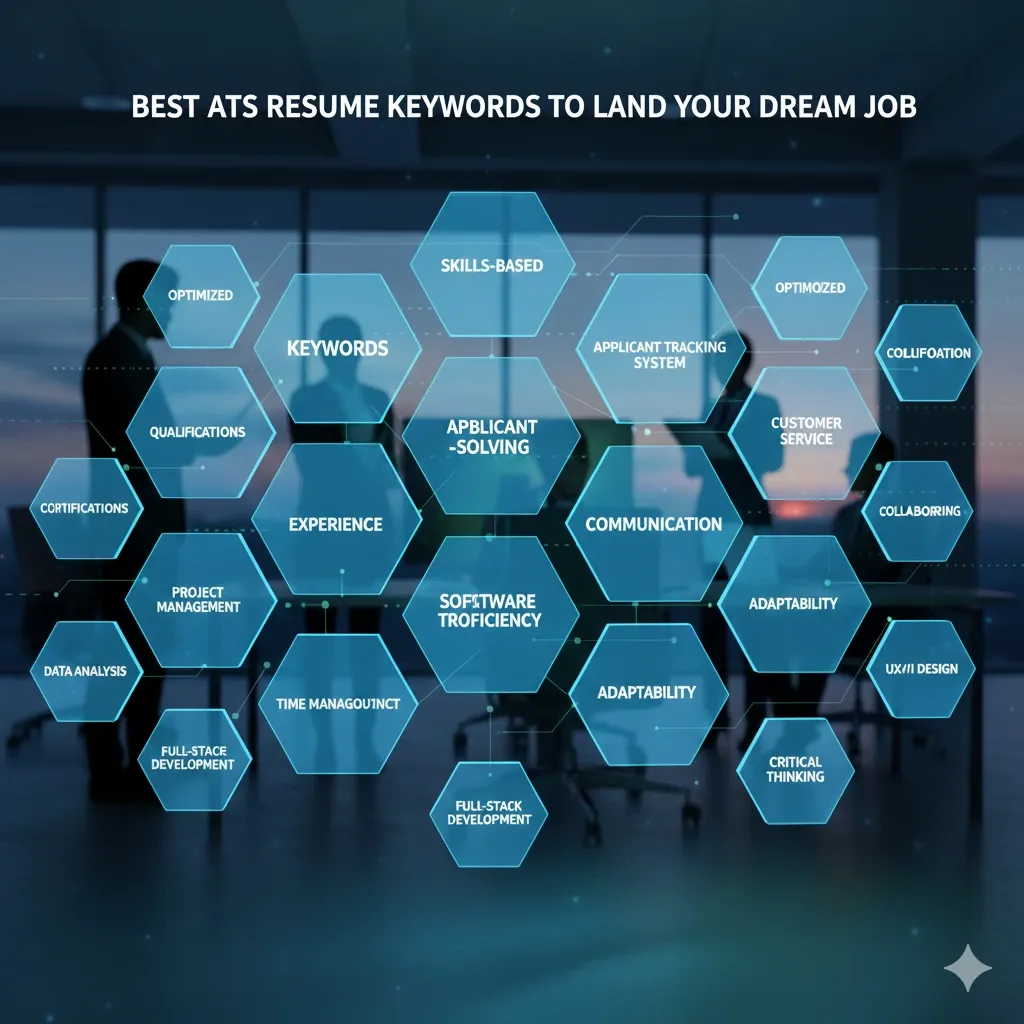
But what if I told you that the "Skills" section isn't just a formality? It’s your secret handshake with the hiring manager. It’s the part of your resume that a recruiter's eye is drawn to in the 7 seconds they spend deciding your fate. It’s your golden ticket past the heartless robot known as the Applicant Tracking System (ATS).
Forget the guesswork. This isn't about stuffing your resume with every buzzword you've ever heard. It's about a strategic, almost magnetic, selection of skills to put on a resume that makes employers think, "We need to talk to this person."
Ready to transform the most dreaded part of your resume into its most powerful asset? Let's dive in.
The Secret Life of a Hiring Manager (And Why Your Skills Are Their Crutch)
Let us, for example, picture Sarah, a hiring manager. It's 4:30 PM on a Friday. She has 75 resumes for one open role and a team waiting for her to find a good candidate. She is not reading; she is scanning. Her eyes are trained to hunt for keywords that match the job description.
Your "Skills" section is her life raft in a sea of text.
As the experts at Indeed point out, this section directly "shows employers you have the abilities required to succeed." It answers their burning questions instantly:
- "Can they do the hard stuff?" (That's your technical skills.)
- "Will they fit in with the team?" (That's your soft skills.)
- "Are they lying to me?" (That's where proof comes in.)
The single most important thing to remember? One-size-fits-all is a recipe for the rejection pile. Tailoring your skills isn't cheating; it's showing you paid attention.
Why Employers Care About Skills on Your Resume
Employers don’t have hours to read every resume; they often spend less than 10 seconds scanning it. What they’re really searching for are keywords that reflect your capabilities and potential fit for the role. As Indeed perfectly puts it, “The skills section of your resume shows employers you have the abilities required to succeed.”
Your listed skills act as proof of your readiness; they tell the employer that you not only understand the role but can also execute it effectively. Moreover, Applicant Tracking Systems (ATS) often filter resumes based on specific skill keywords. So, tailoring your resume to match the job description isn’t optional anymore, it’s essential.
Your Skills Toolkit: The 3 Types That Make You Irresistible
Think of your skills like a chef's knife roll. You don't use a fillet knife to chop carrots. You need the right tool for the right job. Your resume is the same.
1. Your "Get Stuff Done" Skills (Hard/Technical Skills)
These are your power tools. They're the specific, teachable, often certifiable abilities that prove you can handle the core tasks of the job.
- What they sound like: Python, Google Analytics, Salesforce, CNC Machinery, Phlebotomy, Adobe Photoshop, SQL.
- Why they rock: They are the non-negotiable, concrete proof you can walk in and start contributing. As My Perfect Resume notes, these are often the skills that get your foot in the door for an interview.
2. Your "Play Well With Others" Skills (Soft Skills)
These are your superpowers. They're not about what you do, but how you do it. They are the magic that makes people want to work with you.
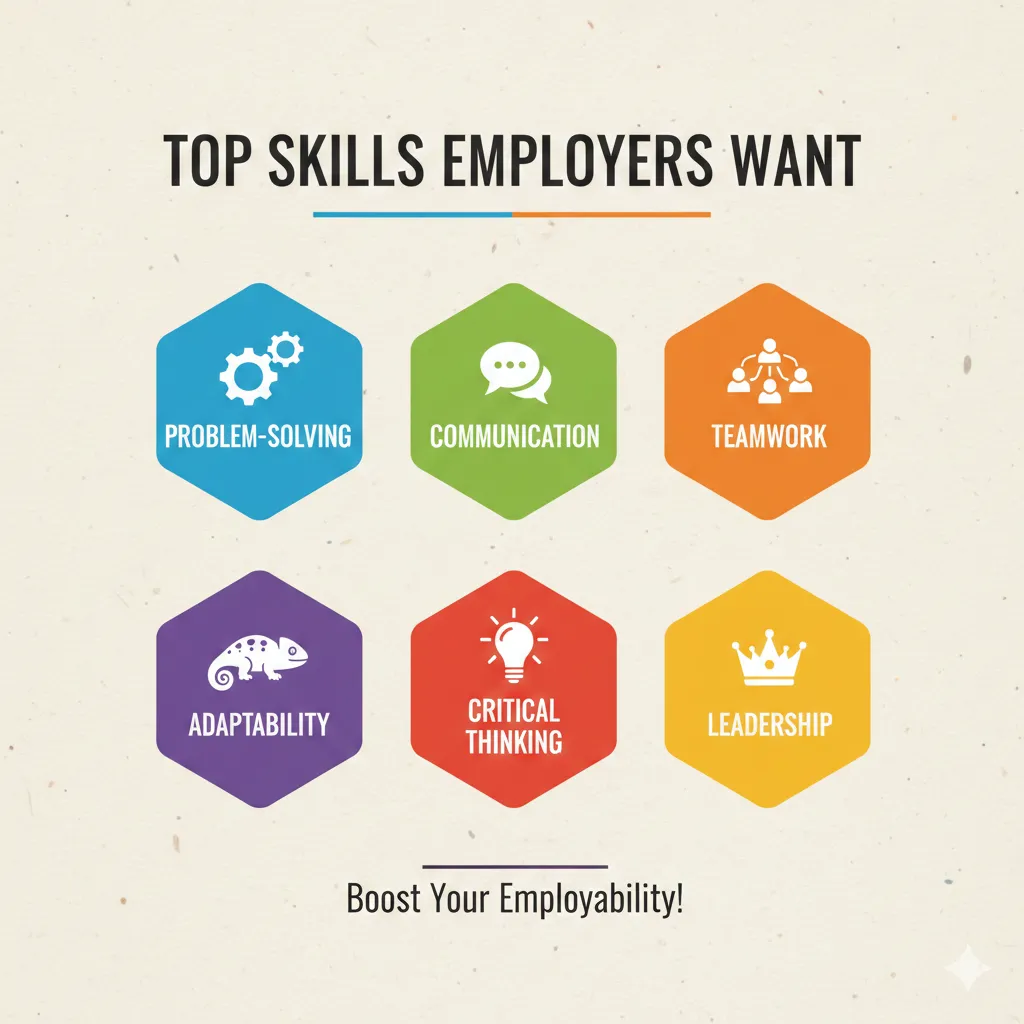
- What they sound like: Communication, Problem-Solving, Adaptability, Leadership, Empathy, Creativity.
- Why they rock: A coding genius who can't explain their work is less valuable than a good coder who can collaborate and inspire. These skills are the glue of a high-performing team.
The Pro-Move: Don't just list them, prove them. See the difference?
- Weak: "Good at problem-solving."
- Powerful: "Solved a persistent client billing issue by creating a new workflow in Salesforce, reducing complaint tickets by 40%."
3. Your "Secret Weapon" Skills (Transferable Skills)
These are the skills that are useful anywhere, making you agile and resilient. They're especially powerful for career-changers or new grads.
- What they sound like: Time Management, Research, Digital Literacy (e.g., mastering Slack/Teams), Customer Service, Continuous Learning.
- Why they rock: They show you're a well-rounded professional who can adapt and learn, no matter the environment.
Best Skills to Put on a Resume (Full List & Role-specific Examples)
Here’s a list of the best skills to put on a resume in 2025, categorized for clarity and relevance.
Category | Top Skills | Example of Use |
Communication & Leadership | Verbal communication, Public speaking, Mentoring, Team leadership | “Mentored 4 junior analysts leading to a 15% performance improvement.” |
Technology & Tools | Excel, Python, SQL, AWS, CRM, Canva, Google Analytics | “Automated data analysis using Python to reduce manual reporting time by 40%.” |
Creative & Marketing | Copywriting, SEO, Social media, Branding, Campaign management | “Increased social engagement by 50% through strategic SEO content.” |
Administrative & Management | Scheduling, Documentation, Process optimization, MS Office | “Improved documentation accuracy by 30% with a revised filing process.” |
Sales & Customer Service | Negotiation, CRM, Product demos, Customer support | “Handled 60+ client queries daily while maintaining 95% satisfaction.” |
The "Steal This List" Guide: Best Skills to Put on Your Resume in 2025
Okay, enough theory. Let's get practical. Here is a curated list of the best skills to put on a resume right now. But remember, this is your buffet, you don't take everything.
Mix & Match These: 2025 A-List
- Data Analysis: The ability to make sense of numbers is pure gold.
- AI Prompting & Literacy (Yeah, it's a thing now. Mention specific tools!)
- Adaptability (The only constant is change, right?)
- Digital Communication: Clearly written emails, engaging presentations, and effective video calls.
- Project Management: Keeping things on time and on budget
- Critical Thinking: Aqui, not just taking orders, but questioning wisely
- Emotional Intelligence: Reading the Room and Building Trust
"But What Does This Look Like For My Job?"
Great question. Let's get specific.
For the Tech Wizards:
- Your "Get Stuff Done" Skills: Python, AWS, SQL, React, Cybersecurity Fundamentals, Git.
- How to say it: "Automated data backup processes using Python, saving 5 engineer-hours per week."
For the Marketing Mavericks:
- Your "Get Stuff Done" Skills: SEO/SEM, Google Analytics & Data Studio, Meta Ads, Canva, Copywriting.
- How to say it: "Grew organic blog traffic by 75% in 6 months through a targeted SEO content strategy."
For the Sales Superstars:
- Your "Get Stuff Done" Skills: CRM Software (Salesforce, HubSpot), Negotiation, Prospecting, Presentation Skills.
- How to say it: "Exceeded Q2 sales targets by 200% by leveraging Salesforce to identify and nurture high-value leads."
Your 5-Minute Cheat Code: How to Pick The Perfect Skills
Feeling overwhelmed? Let's make this dead simple. The next time you apply for a job, do this:
- Open the Job Description. This is your cheat sheet. I'm serious. Highlight every verb, every tool, every "required qualification."
- Open Your "Master List." Brain dump every single skill you have, big or small.
- Play Matchmaker. Draw lines between the job's needs and your skills. The ones that match are your top-tier priorities.
- Cut the Fluff. Be ruthless. Your childhood lemonade stand doesn't qualify you for "CEO." Aim for 6-10 highly relevant, powerful skills.
Where the Magic Happens: How to Format Your Skills to Stop the Scroll
You might have the best skills in the world, but if they are a jumbled mess, no one is going to notice. Here’s how to make them scannable and easy.
The "Skills Section Smackdown:
The Classic:The ATS BFF is clean, uses bullet points, and has clear categories.
Example:
TECHNICAL SKILLS
- Languages: Python - Proficient, SQL-Expert, JavaScript-Familiar
- Tools: Salesforce, Google Analytics, Adobe Suite
PROFESSIONAL SKILLS
- Project Management, Data Storytelling, Cross-Functional Leadership
- "Weaver" : Weave your skills directly into your job experience bullets. This provides killer context.
- "Led cross-functional team in problem-solving of supply chain crisis using data analysis in Excel, improving delivery times by 15%."
The Hot Topic: What Technical Skills to Put on a Resume in 2025
Since this is a huge search, let's get specific. Technical skills are your concrete proof of competence. In 2025, it's not just about what you know, but how you frame it.
Don't say: "I know Python. "Do say: "Proficient in Python for data automation and analysis."
Top Technical Skills by Vibe for 2025:
- The "Future-Proof" Techie: AI & Machine Learning, Cloud Computing (AWS, Azure), Data Science (Python, SQL).
- The "Data-Driven" Marketer: AI-Powered SEO Tools, Google Analytics 4, Data Visualization (Tableau), CRM Platforms (HubSpot).
- The "Efficient" Operator: Advanced Excel (PivotTables, VLOOKUPs), ERP Software (SAP), Project Management Software (Asana, Jira).
The Final Boss: Keeping Your Skills Fresh in 2025
The world doesn't stand still, and neither should your resume. Skills that may have landed your last job won't necessarily get you the next one.
Your 2025 Skills Survival Guide:
- Embrace the AI Co-Worker: Learn about ChatGPT, Midjourney, or any other AI tool in your profession. You don't need to be an expert in it, but knowing its use is a big plus.
- Become a learning addict: Invest 20 minutes a week in LinkedIn Learning or Coursera. Even one short course can add a powerful new line to your skills section.
- Do a Quarterly Resume Audit: Every quarter, open your resume. Does it reflect you today or you of two years ago? Update it before you need it.
You've Got This.
There is no need for the experience of completing your skills section to be dreadful. Rather, please consider it an opportunity to boast, but in a savvy way. It is not only your tale of what you can do but, more crucially, who you are professionally.
Thus, inhale deeply. Get that curriculum vitae out. It is not merely skills you are listing, but rather the light that leads the perfect employer directly to you that you are creating.
Need help crafting the perfect resume? Visit Hiretip’s homepage to create a professional, ATS-friendly resume in minutes.
Your Burning Questions, Answered.
Q: Seriously, what's the #1 skill I should put on my resume?
The one mentioned most prominently in the job description. No single "best" skill exists-only that skill which is most applicable to the job you want.
Q: How many skills are too many? I don't want to look cocky.
Think quality over quantity. 10-12 highly relevant skills are far more powerful than 20 generic ones. You're a specialist, not a jack-of-all-trades.
Q: Can I list a skill I'm still learning?
Absolutely! Be honest. Use such terms as, "Familiar with, Currently learning, or Basic knowledge of." It shows initiative and a growth mindset, which employers love.
Q: What is the difference between "Proficient" and "Expert"?
Familiar: You've used it a few times.
Competent: You can work independently using it to get something done.
Expert: You could teach a class on it and troubleshoot complex problems.
Q: Should soft skills or hard skills come first?
For most corporate roles, lead with your Technical/Hard Skills-they're eye candy for recruiters. But if you're in a people-focused field, such as HR, leading with a strong "Professional Skills" section can be very effective.