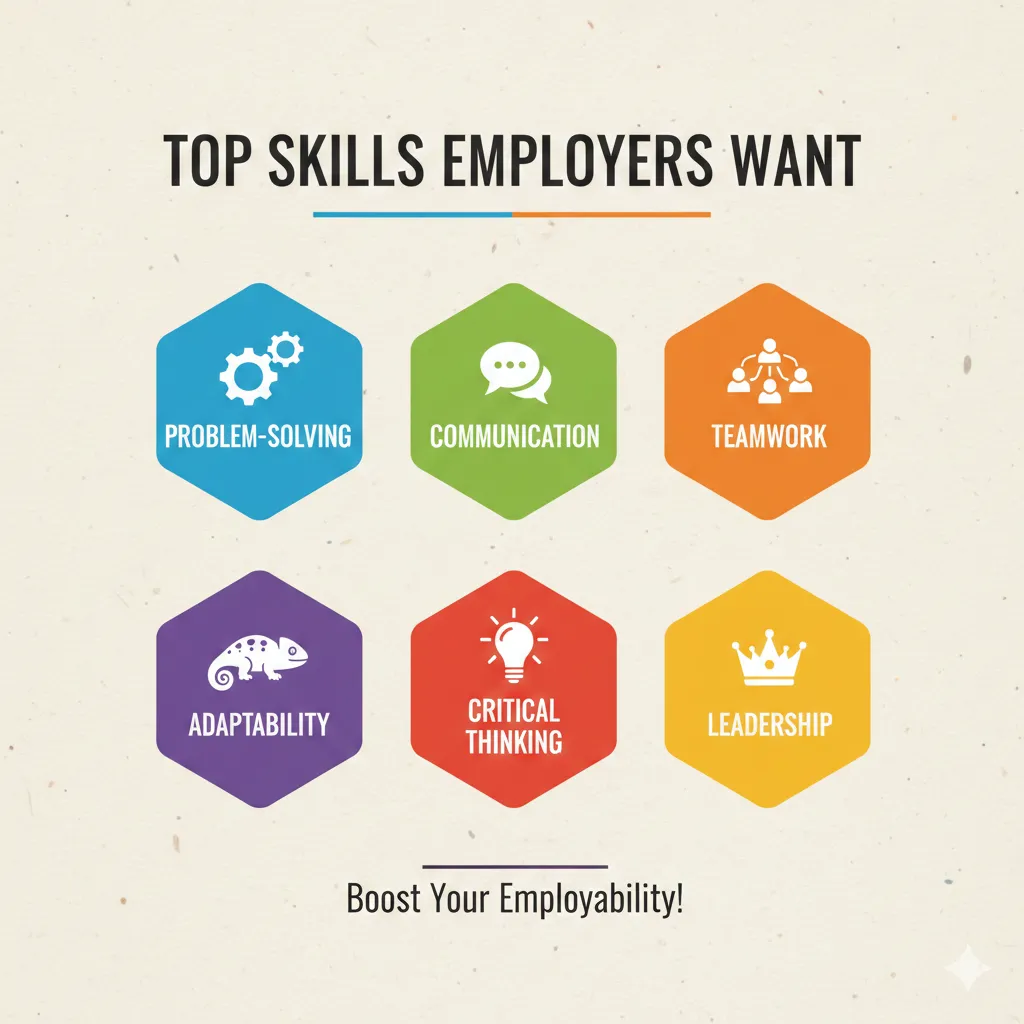
You’ve polished your resume, chosen a clean template, and are ready to apply for your dream job or internship. But then you hit the "Skills" section and your mind goes blank.
"What skills do I even have?"
"Are my part-time job skills relevant?"
"How do I make my resume stand out when I have little work experience?"
If this sounds familiar, you're not alone. For students and freshers, the "Skills" section isn't just a box to tick; it's your golden ticket. It’s where you can shine, prove your potential, and convince a recruiter that you’re the right fit, even without a long list of previous job titles.
This guide is designed to demystify the process. We’ll break down the different types of skills, provide a powerhouse list of the top 20 skills for your resume, and give you real, actionable examples you can adapt today. Let’s transform your resume from "meh" to "must-interview."
Soft Skills vs. Technical Skills: What’s the Difference?
Before we dive into the list, it's crucial to understand the two main categories of resume skills. A strong resume needs a balanced mix of both.
What are Soft Skills?
Soft skills are interpersonal, human-centric skills that dictate how you work, communicate, and solve problems. They are not tied to a specific job but are valuable in every job. Think of them as your professional personality. They include traits like teamwork, leadership, and time management.
Why they matter for freshers: Since you may lack extensive technical experience, your soft skills are the primary evidence of your professionalism, adaptability, and potential to grow.
What are Technical Skills?
Technical skills (or hard skills) are teachable, measurable abilities specific to a job or industry. They are often learned through education, training, or certifications. Examples include programming languages, data analysis, graphic design software, or foreign languages.
Why they matter for freshers: They demonstrate you have the foundational knowledge to start contributing from day one.
The Top Skills for Your Resume (With Fresher-Friendly Examples)
Here is a curated list of the most in-demand skills. Use this as a checklist and customize it for each job you apply for.
Top 10 Soft Skills for Resume
- Communication
- What it is: The ability to convey information clearly and effectively, both in writing and verbally.
- Why it's important: Every role requires interaction with colleagues, managers, or clients.
- How to phrase it on your resume:
- "Articulate Written and Verbal Communication"
- "Active Listening"
- "Public Speaking"
- Example for a Fresher: "*Documented and presented a 20-page research project to a panel of professors, receiving top marks for clarity and structure.*"
- Teamwork & Collaboration
- What it is: Working effectively and harmoniously with others to achieve a common goal.
- Why it's important: Companies are built on teams. Showing you're a team player is non-negotiable.
- How to phrase it on your resume:
- "Collaboration"
- "Cross-Functional Teamwork"
- "Conflict Resolution"
- Example for a Fresher: "*Collaborated with a team of 4 students to organize a university charity event, successfully raising $5,000 by delegating tasks and holding weekly sync-up meetings.*"
- Problem-Solving
- What it is: The ability to identify a problem, analyse the root cause, and develop effective solutions.
- Why it's important: Employers hire people to solve their problems.
- How to phrase it on your resume:
- "Analytical Thinking"
- "Critical Thinking"
- "Solution-Oriented"
- Example for a Fresher: "Identified a recurring error in the student club's budgeting spreadsheet, creating a new template that reduced calculation errors by 90%."
- Adaptability & Flexibility
- What it is: Being open to change and able to adjust to new conditions, processes, or technologies.
- Why it's important: The modern workplace evolves rapidly. Adaptable employees are resilient and valuable.
- How to phrase it on your resume:
- "Agility"
- "Quick Learner"
- "Open to Feedback"
- Example for a Fresher: "Adapted to remote learning by mastering new digital collaboration tools (like Trello and Zoom) and maintained a 3.8 GPA while doing so."
- Leadership
- What it is: The ability to motivate, influence, and guide a group of people. You don't need a formal title to be a leader.
- Why it's important: Shows initiative and the potential to grow beyond an entry-level role.
- How to phrase it on your resume:
- "Team Leadership"
- "Mentoring"
- "Taking Initiative"
- Example for a Fresher: "Mentored two junior students on academic best practices, helping them improve their grade average by one full letter grade."
- Time Management
- What it is: The ability to use your time effectively and productively, especially to prioritize tasks and meet deadlines.
- Why it's important: Proves you can handle multiple responsibilities without constant supervision.
- How to phrase it on your resume:
- "Organization"
- "Prioritization"
- "Meeting Deadlines"
- Example for a Fresher: "*Managed a course load of 5 subjects alongside a part-time job (15 hours/week) by using digital planners and time-blocking techniques, consistently submitting assignments ahead of schedule.*"
- Work Ethic
- What it is: A commitment to hard work, diligence, and reliability.
- Why it's important: It’s the foundation of trust between an employee and employer.
- How to phrase it on your resume:
- "Dependability"
- "Proactive"
- "Results-Driven"
- Example for a Fresher: "Recognized as 'Employee of the Month' twice at a part-time retail position for consistently exceeding sales targets and demonstrating reliability during peak hours."
- Creativity
- What it is: The use of imagination or original ideas to create something or solve a problem.
- Why it's important: Drives innovation and helps companies stay competitive.
- How to phrase it on your resume:
- "Innovative Thinking"
- "Idea Generation"
- "Design Thinking"
- Example for a Fresher: "Designed a creative social media campaign for a class project that increased hypothetical follower engagement by 40%, using Canva for original graphics."
- Emotional Intelligence
- What it is: The capacity to be aware of, control, and express one's emotions, and to handle interpersonal relationships judiciously and empathetically.
- Why it's important: Creates a positive and productive work environment.
- How to phrase it on your resume:
- "Empathy"
- "Self-Awareness"
- "Interpersonal Skills"
- Example for a Fresher: "Mediated a disagreement between two group project members by facilitating a calm discussion, allowing the team to refocus and complete the project successfully."
- Attention to Detail
- What it is: The ability to achieve thoroughness and accuracy when accomplishing a task.
- Why it's important: Reduces errors, improves quality, and shows you care about your work.
- How to phrase it on your resume:
- "Accuracy"
- "Quality Assurance"
- "Meticulous"
- Example for a Fresher: "*Proofread and edited 10+ peer essays, identifying grammatical and structural errors to help improve their overall quality and grades.*"
Top 10+ Technical Skills for Resume
- Microsoft Office / Google Workspace Suite
- What it is: Proficiency in Word/Docs (document creation), Excel/Sheets (data analysis), and PowerPoint/Slides (presentations).
- Why it's important: These are the fundamental tools of the modern office.
- How to phrase it on your resume:
- "Microsoft Excel (PivotTables, VLOOKUP)"
- "Google Sheets (Data Visualization, Formulas)"
- "Advanced PowerPoint Design"
- Data Analysis
- What it is: The ability to collect, process, and draw insights from data.
- Why it's important: Data-driven decision-making is critical in all industries.
- How to phrase it on your resume:
- "Data Interpretation"
- "SQL"
- "Microsoft Power BI / Tableau"
- Programming & Coding
- What it is: Writing code to develop software, websites, and applications.
- Why it's important: The backbone of the tech industry and many others.
- How to phrase it on your resume:
- "Python"
- "Java"
- "HTML/CSS/JavaScript"
- Digital Marketing
- What it is: Promoting a brand or product through digital channels.
- Why it's important: Marketing is now predominantly online.
- How to phrase it on your resume:
- "SEO/SEM"
- "Social Media Marketing (Facebook, Instagram, LinkedIn)"
- "Email Marketing (Mailchimp)"
- Graphic Design
- What it is: Creating visual content to communicate messages.
- Why it's important: For roles in marketing, communications, and content creation.
- How to phrase it on your resume:
- "Adobe Creative Suite (Photoshop, Illustrator, InDesign)"
- "Canva"
- "UI/UX Design Principles"
- Project Management Tools
- What it is: Using software to plan, organize, and manage resource pools and develop resource estimates.
- Why it's important: Shows you can manage workflows and collaborate on projects.
- How to phrase it on your resume:
- "Trello"
- "Asana"
- "Jira"
- Technical Writing
- What it is: Simplifying complex information into clear, understandable documentation.
- Why it's important: Essential for creating manuals, reports, and guides.
- How to phrase it on your resume:
- "Documentation"
- "Report Writing"
- "Proposal Writing"
- Foreign Languages
- What it is: Proficiency in a language other than your native tongue.
- Why it's important: A huge asset for global companies and customer-facing roles.
- How to phrase it on your resume:
- "Spanish (Fluent)"
- "French (Conversational)"
- "Mandarin (Basic)"
- Financial Literacy
- What it is: Understanding of financial concepts like budgeting, forecasting, and accounting.
- Why it's important: Crucial for roles in business, finance, and even for managing project budgets.
- How to phrase it on your resume:
- "Budgeting"
- "Financial Modeling"
- "QuickBooks"
- CRM Software
- What it is: Using Customer Relationship Management platforms to manage a company’s interactions with customers.
- Why it's important: Key for sales, marketing, and support roles.
- How to phrase it on your resume:
- "Salesforce"
- "HubSpot CRM"
- "Zoho CRM"
How to Choose the Right Skills for Your Resume as a Fresher
You don’t need to list all 20 skills. The key is relevance. Follow these steps:
- Deconstruct the Job Description: This is the most critical step. Highlight every skill the employer mentions. If they say "looking for a team player with Excel knowledge," your resume must include "Teamwork" and "Microsoft Excel."
- Identify Your Transferable Skills: Think about your experiences—academic projects, part-time jobs, volunteer work, sports, and student clubs. What skills did you use? Leading a group project uses Leadership and Teamwork. Working in a fast-food restaurant requires Time Management and Customer Service.
- Match and List: Create a list that matches your skills with the ones in the job description. Prioritize these matched skills at the top of your resume's skills section.
How to Present Skills on Your Resume Effectively
Don't just list skills in a block of text. Make them easy to find and understand.
- Create a Dedicated Skills Section: Use a clear heading like "Core Competencies" or "Relevant Skills." Use bullet points and columns to organize them.
- Weave Skills into Your Experience & Projects: This is where you prove you have them.
- Instead of: "Member of University Debate Club"
- Write: "Collaborated with a team to research and structure arguments for weekly debates, honing persuasive communication and critical thinking skills under time pressure."
Example:
| SOFT SKILLS | TECHNICAL SKILLS |
|---|---|
| Communication | Microsoft Office Suite |
| Problem-Solving | Python (Basic) |
| Time Management | Canva |
| Teamwork & Collaboration | SEO Fundamentals |
Final Pro-Tip: Show, Don't Just Tell
The most powerful resumes don't just list skills; they demonstrate them with action and results. Use the STAR Method (Situation, Task, Action, Result) to frame your experiences.
- Situation: The context (e.g., a challenging group project).
- Task: Your goal (e.g., to complete the project on time).
- Action: What you did, using a specific skill (e.g., "I created a shared project plan in Trello to delegate tasks and manage deadlines...").
- Result: The outcome, quantified if possible (e.g., "...which resulted in our group receiving an A grade and finishing a week ahead of schedule.").
By strategically selecting and powerfully presenting your skills, you can create a compelling resume that opens doors. Your potential is your greatest asset, now go and show them what you’ve got
FAQs
Q: What are the most important skills to include on a fresher’s resume?
Include a mix of hard skills (like MS Office, programming, or data analysis) and soft skills (like communication, teamwork, and problem-solving) relevant to the job.
Q: How many skills should I list on my resume?
Focus on 6–10 key skills that match the job requirements. Quality is better than quantity, so highlight your strongest and most relevant abilities.
Q: Should I include both technical and soft skills on my resume?
Yes, employers value a balance of technical expertise and soft skills like communication, adaptability, and teamwork, especially for freshers and students.
Q: How can I provide examples of my skills on a resume?
Use brief bullet points or descriptions showing how you applied the skill in projects, internships, volunteer work, or academic achievements.
Q: Can a student with no work experience still showcase strong skills?
Absolutely. Highlight skills gained from coursework, projects, internships, online courses, volunteering, or extracurricular activities to demonstrate your abilities.
Q: How should I prioritize skills on my resume?
List the most relevant skills first, based on the job description. Updating your skills to match employer requirements increases your chances of getting noticed. If you are not sure, talk to a friend and ask about the skills he thinks you are best at.
Read the job description carefully and note repeated terms under "requirements" or "preferred skills." Match your own abilities and highlight them naturally in your resume.
Q: Should I mention soft skills with examples?
You can mention a few examples in the experience/ project section, and briefly mention how you demonstrated these skills. Example for a college project: Lead a team of 5 members, collaborated with frontend & backend teams to deliver XYZ feature within X days.
Q: Can I add skills that I’m still learning?
Yes, but be honest. You can include skills you’re currently improving through courses or projects, and mention them as “beginner” or “in progress.”
Q: How do I describe skills if I don’t have work experience?
Use academic projects, volunteer work, or internships as examples. For instance, “collaboration” can come from group projects or college events you helped organize.
Q: How can I make my resume’s skills section ATS-friendly?
Use standard keywords (like “communication,” “JavaScript,” or “data analysis”) instead of fancy synonyms. ATS systems scan for exact matches from the job posting. Go through the job description and add the skills you are best at.